

DRG validation is a lifeline in the healthcare economy.
According to the 2024 Medicare Fee-for-Service Supplemental Improper Payment Data report, the incorrect coding error category accounted for $3.2 billion in projected improper payments, representing 10% of the total in 2024.
The fix? Smarter, faster, AI-native DRG Validation.
Not the generic, buzzword-ridden kind. We’re talking real, scalable, clinically grounded validation that CDI professionals can trust and use, right now.
Welcome to our no-fluff CDI blog series.
Let’s dive into how to turn your DRG review process into a revenue-driving, compliance-focused, and denial prevention machine, powered by AI
What Is DRG Validation?
DRG stands for Diagnosis-Related Group – the code determining how much your hospital gets paid for an inpatient stay.
It’s based on:
- The principal diagnosis
- Secondary diagnoses (like CCs and MCCs)
- Procedures
- Discharge status
DRG Validation is the process of reviewing documentation and coded data to ensure that the assigned DRG truly reflects the patient’s clinical condition and treatment.
Types of DRG Reviews
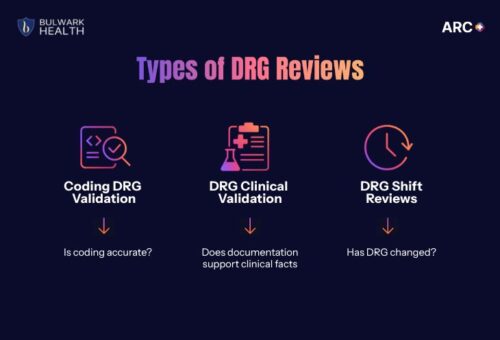
To catch the gaps that hurt revenue, compliance, or accuracy, hospitals must layer three critical reviews. The types of DRG reviews are:
Coding DRG Validation
Is the coding accurate and compliant with official guidelines?
DRG Clinical Validation
Does the documentation support the clinical facts (labs, imaging, physician notes)?
DRG Shift Reviews
Has a DRG changed due to annual code updates or errors that impact reimbursement?
Why Most DRG Reviews Fall Short
Traditional DRG validation is reactive. It often kicks in:
- After coding is completed
- After a denial has occurred
- Or during an audit
That means lost time, lost money, and wasted effort.
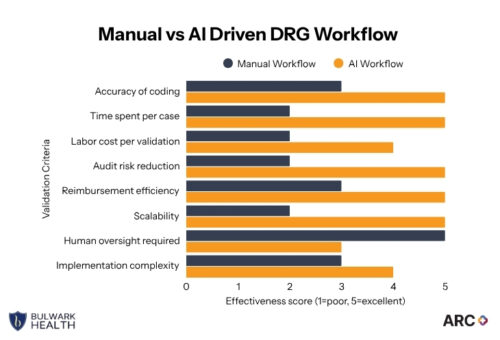
Plus, manual validation can’t scale:
- CDI teams review ~20-30% of high-risk cases
- DRG mismatches in different payment versions go undetected
- Missed NTAP and DRG tiering errors reduce compliant revenue
It’s not that your team isn’t working hard. But this system wasn’t built to scale or catch high-complexity coding subtleties.
Recommended Read: How AI Is Transforming RCM in Medical Billing
How AI Transforms DRG Validation
Here’s what AI brings to the table – and how it avoids becoming just another black-box automation tool:
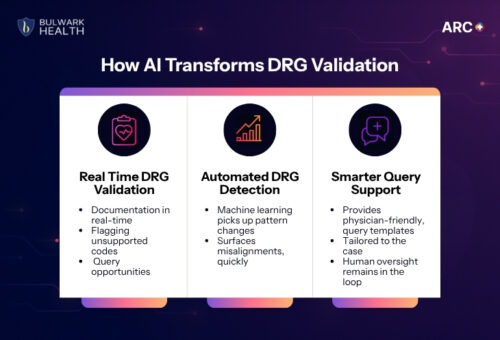
Real-Time DRG Validation
Bulwark’s ARC+ analyzes documentation in real-time, flagging unsupported codes, query opportunities, and DRG mismatches before the claim is finalized.
Automated DRG Shift Detection
Machine learning picks up pattern changes across coding cycles and quickly surfaces cases impacted by DRG shifts or misalignment between coding and clinical facts.
Smarter, Human-Checked Query Support
Instead of auto-suggesting risky MCCs, ARC+ provides physician-friendly, compliant query templates tailored to the case. Human oversight remains in the loop, always.
What Bulwark’s ARC+ Does Differently
ARC+ isn’t another bolt-on review platform. It’s a CDI engine built from the ground up to enable:
- AI-native prioritization – Focuses your team on charts that impact DRG shifts, quality metrics, or revenue.
- 100+ customizable query templates – MCCs, CCs, HCCs, NTAP – you name it.
- Real-time flagging – No more post-bill cleanup.
- Dashboards and scorecards – Track CDI, coder, and provider performance.
- Clinical + coding collaboration – Designed with provider workflows and documentation behavior in mind.
Final Thoughts
DRG Validation = Bigger Outcomes, Not Just Fewer Errors
Hospitals using advanced DRG validation workflows report 700% ROI on DRG validation programs.
Hence, DRG validation is the last place you want to cut corners.
It’s where your hospital earns or loses millions.
If your CDI team isn’t using intelligent tools like ARC+, they’re missing not just errors – but growth.
Book a demo with Bulwark and see ARC+ can add value to your systems!